Category Archives: aging

When Your Parents Die

Some years back, a wise Vermont friend told me, “When both of your parents are gone, it’s as if a roof over your head has suddenly disappeared that you never even knew existed.” I wondered what that would feel like.

When my old Fathah recently died (he loved being called “Fathah” with a Boston accent), I found out. Even though we had been taking care of him, not he of us, he’d remained always somehow … in charge. Now I’m adrift. Untethered. When my mother died six years ago, I became an easy crier. So when people offer me condolences with those pained eyes, I lose it. Which makes me want to avoid people. No roof. I feel for people whose parents died young. Their roof was more evident, and necessary.

I was fortunate to be in the room when he went. It was painful, and beautiful, and profound. And painful. I had raced to be there in a rental car in the dark and somehow made it. Maybe he’d waited. 

Just as I got there, 21 members of his choir arrived to him in his bed. I’ll never forget it. They did parts of “Peace like a River” and “Amazing Grace,” a song I never cared for untilI learned its history just this year. He opened his eyes and smiled. Someone made a crack about football and he smiled wider. My father was nearly deaf. Yet he heard them. 

He couldn’t speak, so I “watered” him with straw-fuls of water, and said a lot, which flooded out of me as I wept. I sang into his “good” ear a gospel song he loved, “Down To The River.” And a bit of the Eagles. I was lucky because so many people camp out for days or weeks and the second they go for coffee, their parent takes off. I am certain that at one point he could see me. My father was blind.

He stopped breathing. Then his heart slowed. The nurse got a stethoscope. She said softly, “He’s going.” Pause. “He’s going.” And then my Fathah left the earth. 

I had an awful time leaving his body behind. What if he was still in the room? My sister said by phone, “No way he’s still there. He hated it there. He’s back at the house!” I drove to his house, rolled in my luggage, turned on all the lights inside and out, cranked his beloved Eagles, surrounded by 1,000 photos my parents had framed, and keened.

I’m not a fan of the simple “Sorry for your loss,” or (to vets), “Thank you for your service.”  Each feels a little pat. I’ll say instead, “I’m just so sorry,” or “Thank you for what you’ve done for our country.” I know vets who have given so damned much. I liked it when one person wrote me, “I’m sorry for the loss,” and another: “Well, that sucks.”

The Gifts of the People 
When someone I haven’t seen in a while asks, “How’s it going?”, I sometimes exclaim, “My father died!” It’s all I need to say. Now their expectations of me are lowered, and the window opens for their wisdoms, which have been legion. A sampling:

A brilliant comedy writer friend who’s lost many people texted, “You never get over it. But you get used to not getting over it.”

A tennis pal wrote, “Death is such a part of life … natural, normal, and PAINFUL. We are all holding you up!” Later: “Think about jotting down some favorite memories. Stuff that doesn’t make the obit. It might be an ongoing list you can reflect on just for you. It’s a giant swing of emotions when it’s a parent.”

A library friend emailed, “I think of my parents as the wings that keep me going. I’m made of their DNA, so they’re always with me.”

Someone else said: “I never realized what a big deal it is when your parents die. Then mine did.”

A cashier said, “When you don’t have a good relationship with a parent and they die, you never get a chance to repair it.” A few people said this. My internal reaction was, “Well, it’s really the parent’s job to repair it.” But a healer I know recounted how he, as a young child, initiated the repairing. His father even mentioned it to him upon his deathbed.

The officiant at Fathah’s service has been a minister for decades. I asked how he keeps doing it. He said, “I do it. Then, I move onto the next person to help.” I have found that, indeed, helping others is a massive balm. Traumatized people agree.

A lovely local minister I’ve never met offered a phone call. He said many things that helped. “Everyone is surprised at their emotions when someone dies … it is a matrix of circumstances and personalities. You’re not in control of their death, or your feelings or thoughts. It is beyond your ability. Unless the feelings are intrusive, ongoing, embrace them.” 

He went on. If you had a difficult relationship: “Examine in your heart why you are having these feelings. You cannot get to the bottom of it, but it can help to get inside their head. Ask God why they said or did the things they did.” It was odd he said this, because I’d recently had an epiphany where I “got” that my father’s criticisms were sometimes about his concern for me. He thought I was making the wrong decisions or on the wrong side of politics. He feared for me.

A dear contemporary whose husband died a 2 years ago wrote, “I feel like I’m in Stage 15, not that I have numbered them. Lots of examining stuff in a new light, as if I’ve moved onto higher ground and am looking back and down. Still pain, but a softer ache. Regret and acceptance.”

Ah, regret. That has been terrible. Not just the second parent to go, but the one I had a less easy relationship with. Also, he went so quickly. I thought we’d have weeks together, not one hour. When I find the clippings I was to read to him, the earbuds for him to hear my audiobook — or music — a memory of Christmases past, a post-it of cheery news about Barnard and Vermont … I bawl with a burning regret. I never got the chance. People say, “Read it to him now!” Oh friends, it’s so not the same. And much as I grieve for myself, and his wish to live longer, I’m relieved he’s out of pain.

Recently, an old friend and I were talking about the loss of certain houses in our lives. When I brought it up, I thought she’d think me petty, but she was totally on board, regaling me with stories of her grandparent’s magical house (replete with a non-working carousel and working miniature trains big enough to ride). Others agreed. 

You can picture every inch of the house. The old appliances and countertops, the cabinets, lighting, the bed you slept in so soundly. If they die, you go through every inch of the place deciding what to keep. Your parents’ entire lives are chronicled in the house. But you’d need a museum to keep it all. Then someone buys it and utterly destroys its character. White cabinetry? A tear-down? When the house goes, all the memories that were inside … vanish. They are now only in your head. And as others pass on, there is ultimately only one Keeper of the Memories. Which is the strangest thing.

What I have mostly found is this: no matter what shape they were in when they died, you always wanted more time with them. Even just five minutes. You don’t want them to suffer, at all, but at least when you had to take care of them, they were still in the room. You could still be loving, even if it was only going in just one direction. You don’t want them to go.

I have heard this sometimes happens even when the parent was declining with memory loss. Initially, they’re on the phone trying to figure out whom they’re speaking with (their own child), or rooting for the wrong team in sports — some of it tragic in the moment and later comical, or vice versa. Then it gets worse. Much worse. But children do not always feel relief when that parent dies. They don’t want them to go.

There is no way I’m going to grieve this time as long as I did for my mother (3 years?). Fathah had a great life and knew it. I’m going to grief counseling, the gym, the woods, acupuncture. I’ll call those who offered to talk. Including Hospice personnel, God love them.

Take Dictation
One last piece of advice. As trips to Fathah 1,000 miles away became increasingly undoable, I’d take “dictation” from him by phone about his life. He loved talking — and having a secretary again, I think. All of his gems informed the obit, and gave me things to tell my family and his sister that we never knew. It also explained some things.

I leave you with a laugh. My dad had a great big sense of humor, and would be thrilled I ended with this. It’s the funniest, yet loving, obit:

Goodby, Fathah. I love you so. Thank you for everything. Good night.

Ann Aikens is an author, columnist, speaker, and blogger. Her darkly comical book of advice, A Young Woman’s Guide to Life: A Cautionary Tale, was published in 2023, her Upper Valley Girl column since 1996. Find events and bookshops at annaikens.comher blog is uppervalleygirl.com. Her father was delighted by her humble scribblings.

Change of Seasons, Change of Heart, Change

At the end of an idyllic college reunion weekend, a friend said three words as we watched a classmate loading his car become morose. “Transitions are hard,” she whispered.

Truer words never spoken. I wish someone had said them to me decades ago. 

Because emotions are more dealable when you know why you’re feeling them. Such as: “I’m despondent because I’m going through a transition.” Not: “I’m overreacting.” Or “I’m losing my mind for no apparent reason.” At reunion, it was this: “I had the best time this weekend. I love my funny, smart college friends. Now I have to go home.”

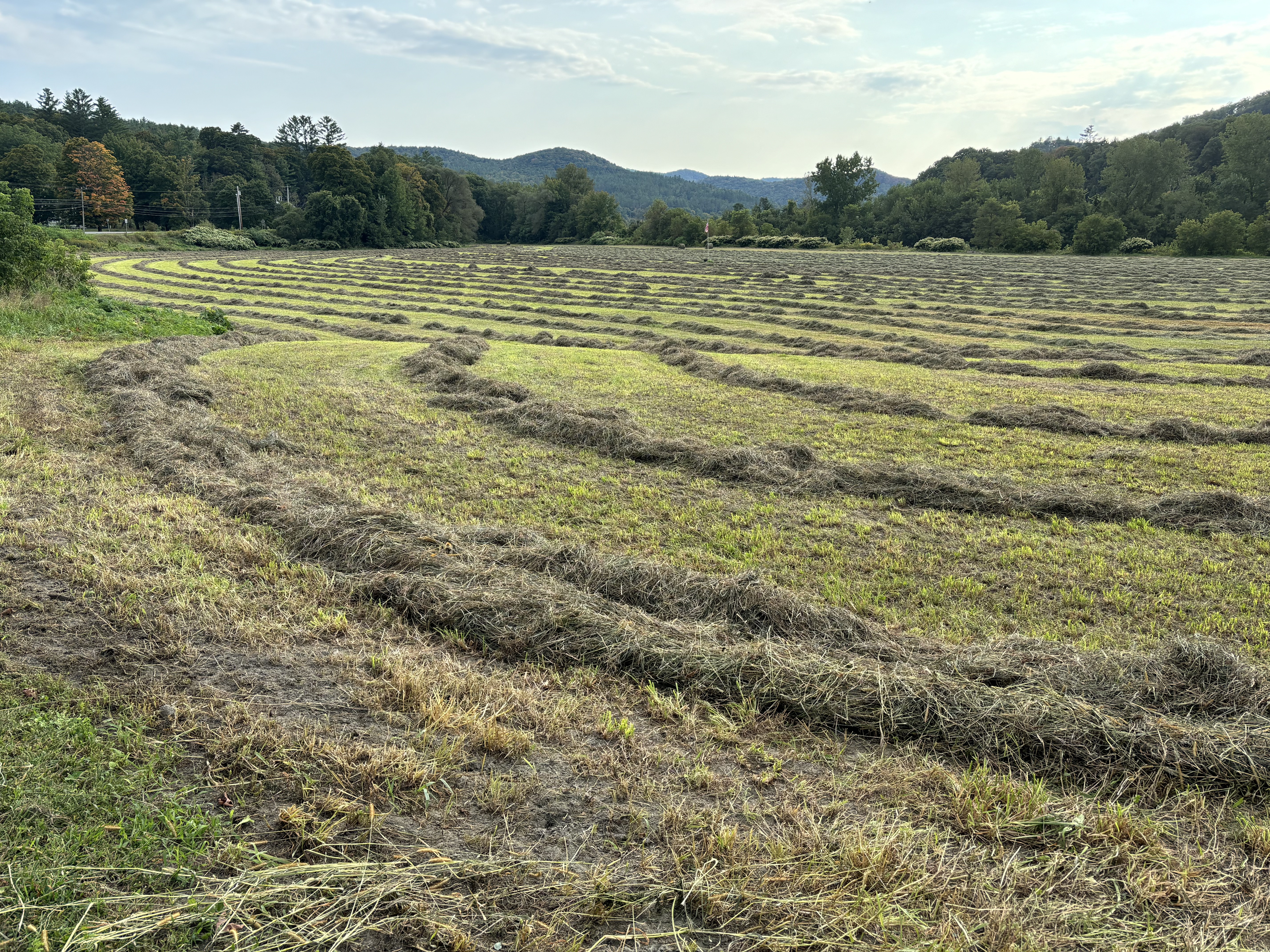
Transitioning seasons is a hard one for many. Some lament the end of summer, particularly the gardeners and the sun- and water- lovers. Myself, I welcome fall. Summer drags on too long for me. When the sun shines, we feel obligated to make hay. When we have a summer with little rain, that’s a lot of haymaking. Read: outdoorsy work, socializing, exercising. There’s not much time to … reflect. It feels to me like a lot of “racing around,” as my mother would put it.

Fall’s shorter days heighten our more introspective inclinations, for good or bad. I savor the colors and the smells of autumn (if not the Leafer traffic), the harvest, the stews, the cooler temps, the colder waters. Stick season delights me, while it sends others spiraling downwards.  A few weeks ago was monarch butterfly season. Then, termite season. Now: wasps-looking-to get-in-the-house season. Some geese already heading south. Boom boom boom, one after the other. Change. 

The longer you live, more change. With each season, an anniversary: we remember something – or someone – now gone. Family and friends who have died. The houses loved, with so many memories, sold. My pal I used to take to the summer fried clam shacks or the fall apple festivals now unable to leave his residence! Nieces and nephews I rarely see! Who, when small, had inventive costumes for Halloween. (One Halloween the youngest declared she would be: “a marshmallow on a stick”. And she was). Little them, all running up and down streets for tricks and treats. I’m terribly nostalgic for those times. I am gladdened when anyone says they miss when their kids were young. Then I’m not alone.

I asked a college friend, what change was hard about becoming an empty nester? Was it that the house grew quiet, that you missed your daughter’s presence, that three was now two? He said, “All of it … and just … where did 20 years go?”

There’s that – the growing up of the youth below us – sometimes as the people above us, who took care of us, now need caretaking. And when the once-capable parents die, as a sage friend put it, “It’s like losing a roof over your head that you never even knew was there.” Heck, it’s hard enough for me when friends move away. 

Nostalgia is an odd thing, defined by Merriam-Webster as “a wistful or excessively sentimental yearning for return to or of some past period or irrecoverable condition.” The American Heritage Dictionary takes it one further: “Homesickness; esp., a severe and sometimes fatal form of melancholia, due to homesickness.” Yipes! I hope I don’t have the fatal kind. I do hate change. Except for a change of heart. That I like.

I think we’re born with a degree of nostalgia, and life circumstances make it grow more for some people.  Some of us are barely nostalgic at all (I envy you), and some are what I call “nostalgia monsters.” A scientist might call us “superstalgics”. 

A niece and I are both that. We’ll talk about things we miss, and bawl. When I suggested that we are both nostalgia monsters, she said, “I’m so nostalgic that once I rearranged my room and immediately cried because I missed the way it ‘used to be’ an hour earlier.” (One advantage to kids’ growing up: their self-awareness and humor become more sophisticated.)

I’m not sure what function nostalgia serves. It’s mostly just painful. Perhaps, in the way spiritual and artistic and carpentry gatherings connect people within a community, nostalgia connects time within ourselves. It connects our present to our past in a mostly good way. There might be some biological survival-of-the-species value in this. I don’t know. All I know is I couldn’t bear saying goodbye to my elementary school teachers at year-end and I haven’t changed a bit.

It doesn’t matter how logically superstalgics think. We can’t embrace change when our heart is throbbing with sorrow.

Back to fall. Stick season was at one time, for me, a harbinger of the noisy, wonderful family gatherings of Thanksgiving. But my family doesn’t have those any more. My mommy was the center of them, as a mother so often is. Maybe, with age, you have less to look forward to in general. For yourself. You can be happy for the pivotal events in the lives of those younger, but for you, not that much is happening. Maybe you can’t get off work for holidays, or traveling has become difficult. Maybe money is tight, and you can’t visit your people. I get it all.

So if you wax gloomy as the leaves fall, I feel your pain. I won’t say, “Let us embrace change!” any more than I’d say, “Let us wrap barbed wire around hot dogs and eat them!” But I for one can and must distract myself from nostalgia. “Life is for the living,” my sage friend says. 

I yank myself into the present. I help others as able, attend the New World Festival, the Tunbridge Fair, the Morrill Homestead Apple and Cheese Festival, consider crafting holiday gifts. I ponder the Covid-19 test called BinaxNOW and wonder if the NOW indicates urgency, or if it’s an acronym (No Organisms Within?), and whether NOW should be applied to other products, such as TortillasNOW, Old SpiceNOW, or – definitely – ImmodiumNOW. Needs an exclamation point. Good day.

Ann Aikens is an author, columnist, speaker, and blogger. Her darkly comical book of advice, A Young Woman’s Guide to Life: A Cautionary Tale, was published in 2023, her Upper Valley Girl column since 1996. Find bookshops at annaikens.comher blog is uppervalleygirl.com.

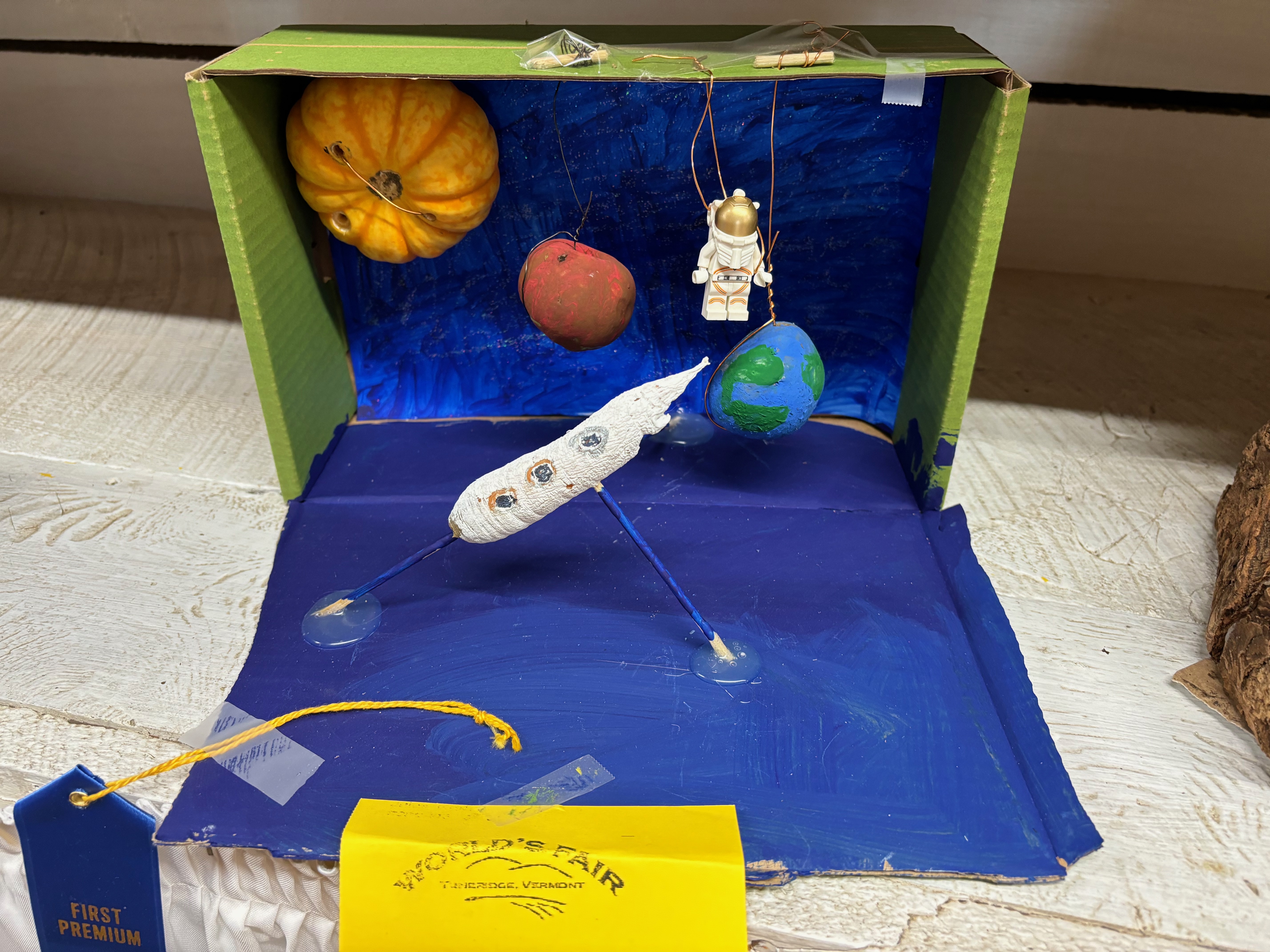
Prize-winning entry in the Children’s Decorated Vegetables at the Tunbridge World’s Fair

2 More Days for free eBook Downloads

Again, free downloads all week at the Amazon. Use the free $0.00 eBook at upper right, not the Kindle download. Sign up for my e-list at www.annaikens.com and win a Prize! And my undying LERV.

Today is Day 1 of Free eBooks

Yepper! Free eBooks now on the Amazon – click the $0.00 eBook on the right, not the Kindle one. A REVIEW would be welcome! Join my email list at annaikens.com and win a PRIZE. Someone will, why not you? Or come to my reading on March 21 in Norwich?

How to be More Funny

When you write something that gets delivered in some way (a book, eulogy, a love letter), you later think of things you left out, or come across things that could have gone in.  Well, in Newspaper Land where this column lives, that can be easily rectified!  Time marches on, but no big whoop because yesterday’s news is yesterday’s news and it’s always a new week. 

To that end … I wrote a month ago about how our messed-up world needs more laughs, that column titled “How To Be Funny.” We had become sorely in need of the medicine of laughter, as it were, in trying tymes. As the world has since somehow gotten even more messed up, I dive into this topic again. Because we need laughs. 

Make Up Words

Use words that don’t exist and see if your listeners run with it. What’s really “sub” about suburban? How about “peri-urban”? Toss it off in conversation, and people will just think they’re behind in the endless modern renaming of things (“TEMROT”). Similarly, create fake acronyms.

Incorporate Weird Things People Have Said into Your Lexicon

Years ago, a friend was driving through a toll in Jersey when the toll booth operator asked repeatedly and incomprehensibly, “Er Zed Poss??” After much back and forth, it was determined that she meant “E-Z Pass.” To this day we call it Er Zed Poss.

Be Unintentionally Funny

Which is funny in and of itself, because you cannot plan to be unintentionally funny. You can soundunintentionally funny, like Suzanne Somers (or a dozen other “dumb blondes,” including Dick Smothers, who played that well), but it is of course intentional. 

Think: Yogi Berra. 

He was clearly not unintentionally funny. It was brilliantly faux faux pas, one after the other.

  • “Nobody goes there nowadays, it’s too crowded.”
  • “You can observe a lot by just watching.”
  • “It’s like déjà vu all over again.”


But When Someone Is Unintentionally Funny for Real,

it’s comedic gold. In high school, someone meant to say “the genteel aristocracy.” He said instead by mistake, “the genital aristocracy.” Which conjures up all manner of images. Some 40+ years later we still laugh about it. 

This happened to me recently. I said, regarding something having to do with Halloween, “Oh goody, something for me to sink my teeth into!”  Ha ha, said a colleague. Realizing I’d likely said something unintentionally funny, I guessed: “Oh … you mean like bobbing for apples?” No, she said: Vampires.

Misapply Slogans to Other Products

A radio station did this once, years ago. They took existing corporate slogans, and applied them as if to promote Viagra. I remember only this gem: “When it Absolutely/Has to Get There/Overnight” (FedEx’s tag line at the time). 

More Absurdity, Please!

It seems that when you become successful in sports, you start your own steakhouse chain. Or BBQ, or something resembling a Chili’s. Successful in music? You develop your own gross-looking “clothing line” or, more hilariously, “fragrance.” (I want to go around smelling like the woman who sang such forgettable songs as [can’t name them].)  When I hit it big, which will be never, I will start a “line” of dignity-based enema kits, create a “lifestyle plan” that involves eating while watching TV, and invent a “fragrance” for dogs. I will call all three “Ann,” just to hammer home my “brand” and all-around greatness, and my legions of sycophantic fans will make me rich, richer, RICHER, R I C H E R,  
R I C H E R R R R R R. You can never have enough.

The Laughs You Give

It may be naïve of me, but it seems that our talk about “fighting against hate” – whether the hate referred to means vicious acts by one group against another, police violence against unarmed civilians, an unsuccessful “War On drugs” that seemingly did nothing, egregious cruelty to children and animals, or 100 others forms of hate – I feel like the “fight against hate” just creates more of the same. Like the Hatfields and the McCoys*: an endless cycle of hateful violence. We humans maybe have this “fight against hate” thing backwards. Yet: how do we love or laugh our way out of attacks and atrocities? I don’t know. Still, perhaps there’s something to it. Maybe it’s like the Southern Poverty Law Center taking away Ku Klux Clan properties in courts of law and, with love, turning the land into summer camps for disadvantaged children of color, thus giving people like me who “hate” haters … the last laugh. Just throwing it out there

Good laffs to you. Because love is one million more times more powerful than hate, and because laughter is a form of love, and because laughter dries tears. Good day.

*Read Malcom Gladwell’s Outliers, chapter 6.

Ann Aikens’ darkly comical, uplifting book of advice, A Young Woman’s Guide to Life: A Cautionary Tale, is available at Amazon & Vermont shops. She has written her Upper Valley Girl column since 1996. Find shops at annaikens.commore of her writing at uppervalleygirl.com.

Remembering the Things that Matter

Delivering a eulogy for someone you’ve known for decades isn’t easy. There’s a bottomless treasure trove of memories, so it’s hard to select the right ones. The ones that will matter to most of the funeral attendees — or that might matter the most to one person? Or maybe that matter most to you, as a speaker? Without the eulogy going on for like two hours. I bet someone, somewhere has set a record for the longest eulogy. Maybe in other countries or galaxies they are very long indeed.

Recently we held a service for sacred Aunt Natalie. Natalie was not technically our aunt, she was our cousin once removed, the cousin of our father. She grew up in Vermont, became a teacher, married a state trooper, and had my two cousins—I mean second cousins. They were the reason my family visited Vermont, and came to love Vermont for more than just her natural beauty.

O, her seasons, all distinct! The fifth season called Mud Season. Stick Season, when the leaves have fallen off the trees, revealing magnificent textural backdrops – and awful housepaint jobs. Grit Season (when winter’s road-sand blows around after the snow’s gone) and Manure Season (when the entire state is fertilized, to our vegetably anticipation and olfactory dismay). Surely there are sub-seasons involving flora or fauna that Dear Reader relishes. Not Black Fly Season.

Sometimes I’ll be in the middle of one season and flash forward into another season entirely. Do you do this? It’s mind-blowing because Vermont is like a different planet in each. I time-travel to the alternate season and think, “Wow, winter: white!” Or: “Summer…wow.”

As with the seasons, I flash back to years gone by. Younger versions of us, the now-gone people still alive — all laughing — us kids up to some mischief. Feels like yesterday. It blindsides me when I’m driving. I cry. As friend Lee says, “It always seems to happen in the car.” 

Back to the cousins. We visited Vermont because our Scottish great-great-great grandparents, blacksmiths, had settled there. The introduction of the automobile caused my dad’s father to pursue other work, in Ohio, where he met his bride. Their summer trips back to Vermont got my dad hooked on ‘mont. Once a parent himself, he got us kids hooked. Back then, kids didn’t get to choose family vacations (as if!). Thank God our parents chose Vermont.

You visit a place not just for her physical characteristics, but for her people. Think of places you’ve been (Maine, the south, islands, Italy) and the locals there with qualities different from people at home, lending that place its particular flava. 

When even one person leaves the planet, the flava of Earth changes, no? Most of you have lost someone close to you. In my (second) cousins’ vernacular, it’s wicked hard.

My Aunt Natalie was born with a spark. Neighbors, hairdressers, toll booth operators … she left an impression on each. You know how some relatives were old your entire life? Natalie always looked to be 50 years old, even at 80. She always wore shorts. But mostly I recall her sparkle and humor and a kind of innocence that seemed like it was from another era. Because it was.

Swimming with Natalie by moonlight in Silver Lake! As my sister said, she had a way of making the everyday magical. She was a true lover of children. Whether you were you pounding out Grand Old Flag on the piano or had sketched an inscrutable picture of nothingness, she’d exclaim, “BeaUtiful!” She made children feel valuable, which I think many children did not feel in decades past. 

Ah, cousins: the gift of noisy fun. Those classic Thanksgivings, Memorial and Labor Days, and of course The Fourth. Something called “bull beans.” Treks via inner tubes to the Barnard General Store for penny candy. Making a game of anything at all. The parents sending us to Richardson’s with returnable bottles to get them “supplies.” We got candy. 

Countless holidays over countless years, always with music, always with laughter. Ever effusive, Natalie would tell my mother, “You make the BEST salads!” My dad would howl, because what’s really involved in a salad? When it was time for my family to leave Vermont, I would cry and my brother would hide, so that leaving became – briefly – impossible. 

Natalie passed bit by bit from our lives.  But these memories remain forever indelible, of an energetic and vivacious woman so greatly loved.  As Dear Reader knows, we never forget those we adored. Our pain at our loss is a beautiful pain. An honoring. As sad as it makes us.

Thank you, Aunt Natalie, for years and years of fun and art and music and jubilance and adventures and hilarity … and most of all, most of all, for your smile and voice and laugh. 

If Dear Reader knows what I’m talking about, maybe today at some point: look up! Say Hello to your people gone by. Tell them you remember, you remember all of it. That you just know you’ll see them again. Good remembering, and good day.

Have Yourself a Sorry Little Breakdown

The doldrums is a nautical term for the belt around Earth’s equator where sailing ships can get stuck on windless waters for days—an apt metaphor even in landlocked Vermont.

For those who get in serious doldrums after the holidays, you’re not alone. In the 70s, as the tree splintered and shed, we’d beg our mother, “One more day!” Understanding, she’d consent to leave it up. I still suffer while boxing up decorations accumulated over 50 years, many hand made by beloved people now grown—or gone. It physically hurts and I go down.

My theory on the plummet’s severity is this: a combination of most humans’ inability to make transitions easily, plus the nostalgia of where one was 5, 20 or 30 years ago—or even just pre-COVID.The holidays are an annual plunge into sentimentality that wrecks some people for a while. After all the togetherness, even if at times fighty, many have to part with beloved people we wished we still lived with, or near, now miles or oceans away. Add to the emotional soup that sometimes we can tell when these people have had enough of us, or vice versa.

There’s something about that pre-holiday hustle and year-end philanthropy. I love the craft sales and transformation of everything from garlanded gas stations to tricked-out buildings. Carols evoke a simpler time. In truth, there were untold disasters and wars and far more domestic abuse back then, fueled by widely accepted over-drinking (think: the “hilarity” of Red Skelton’s drunk character; Dean Martin crooning basted). But hear the first couple of bars of O Holy Night and smell that balsam fir and you are swept back into your own (hopefully abuse-free) childhood or a dreamy image of happier times before you were born. When the decorations left up too long start getting dusty and something—anything—to look forward to seems a long way off, it’s easy to to go into a death spiral.

So last week after a Covid exposure, for the very first time I decided to wallow. None of this Yankee toughie bootstraps crap. No health-giving exercise or efforts to cheer self or others. Just a marathon of self-isolation, sorrow, and mourning.

It was not at first intentional. After leaving family to return to Vermont, I drove and cried until distracted by old radio interviews with Desmond Tutu (an evolved human, yet strikingly down to earth). But then Christmas music came on and sunk me anew, thinking of this very drive I had taken countless times with my now-gone mommy. Once home, I carried inside only my freezable belongings, got in bed, and let it rip. I cried over everything. Loves, parents, pets, houses and friends lost forever. Strangers who got stuck home alone for the holidays by cancelled flights. Refugees. Great people who died in 2021. Awful situations endured both by people I adore and by complete strangers. Sad pieces of fiction I read that never even actually occurred. I ate nothing but old foods around the house. Slept, woke, ate garbage, cried, slept. And you know what happened?

I’d love to say something profound here. But basically….nothing. Nothing happened. I didn’t come up with a grand epiphany. I didn’t resolve to start a new career or humanity-saving nonprofit, invent a climate change solution or clever movie plot. Nothing came of it. As Yukon Cornelius says, “Nuthin’.”

If you bottle it up and never let it out, you’re in trouble. That’s called being repressed. Although I did ask a male friend how he deals with the deaths of his legendarily party-throwing, smarty parents within weeks of each other. His answer: “I keep that locked up deep, deep down inside.” Hell, maybe that’s the right approach. 

The virus and supply chain madness factored in. Due to Covid exposure, I couldn’t leave my apartment for a week upon returning home — Xtreme solitude rarely boosts mental wellness. As for the supply chain, disappointing in December was the lack in stores of favored holiday items, e.g. the annual “limited edition” cookie by Pepperidge Farms’ called Snowballs®. They were only on Amazon—for $19 a bag. A year without Snowballs® is like a year without…Snowballs®. And this year I didn’t get into preparations or meticulous wrapping the way I once did. Threw things into bags with tissue paper. No hand-drawn gift notes. No Christmas cards.  I skipped movies I watch yearly. And all of that, while freeing, ultimately felt crummy. Next year I’m going back to overdoing it. Obviously, that’s the answer. So there’s the epiphany. 

At this time of year I usually suggest one of three things. 

  1. Make a list of what you got done in 2021. You’ll be surprised.
  2. Make a list of intentions for 2022, before it gets frittered away.
  3. Books: Greenlights; A Girl’s Guide to Missiles; Life (Keith Richards); Boys in the Trees (Carly Simon); Good Habits, Bad Habits; Olive Kitteridge, Olive Again, and Oh William; Mobituaries (Mo Rocca); Dodging Energy Vampires; A Girl Named Zippy; All The Light We Cannot See; The Power of Now; How To Be AloneJoyful; Elevation (S. King); and my personal favorite, A Man Called Ove. Email me for a personal recommendation for you. That’s my gift.

Good repression, good wallow, or good New Year with light at the end of the pandemic tunnel. 

Fake Braille for the Newly Blind

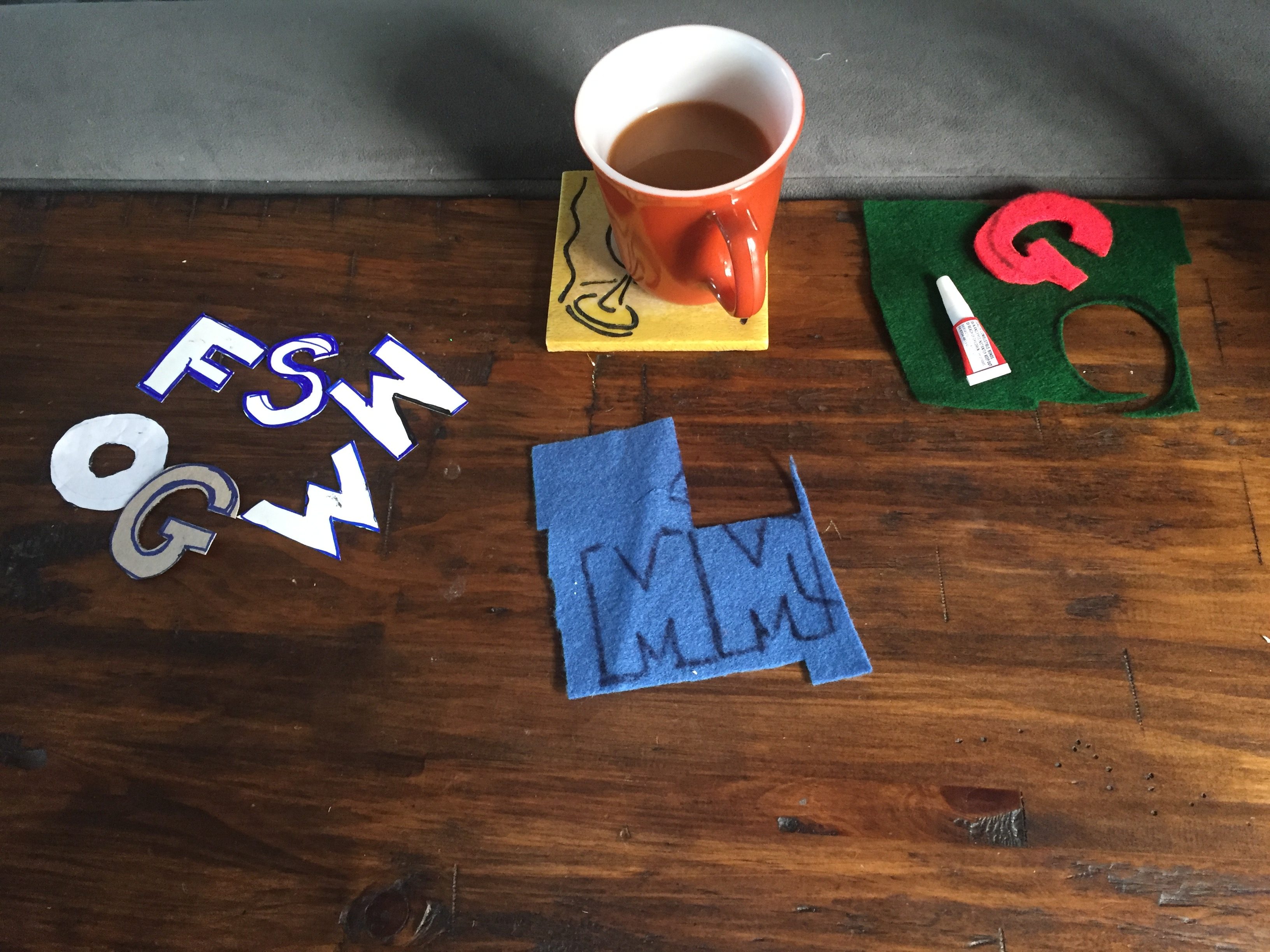
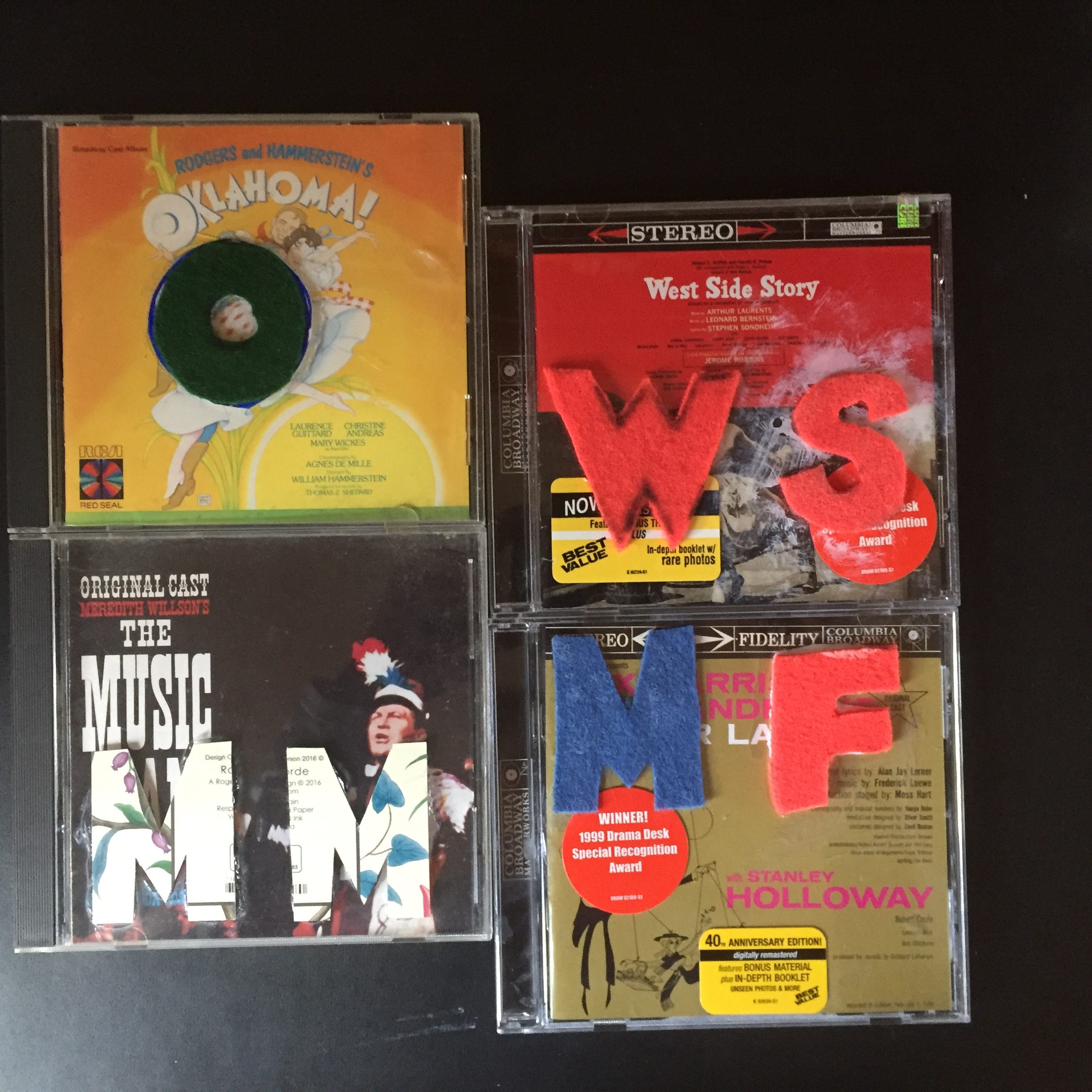
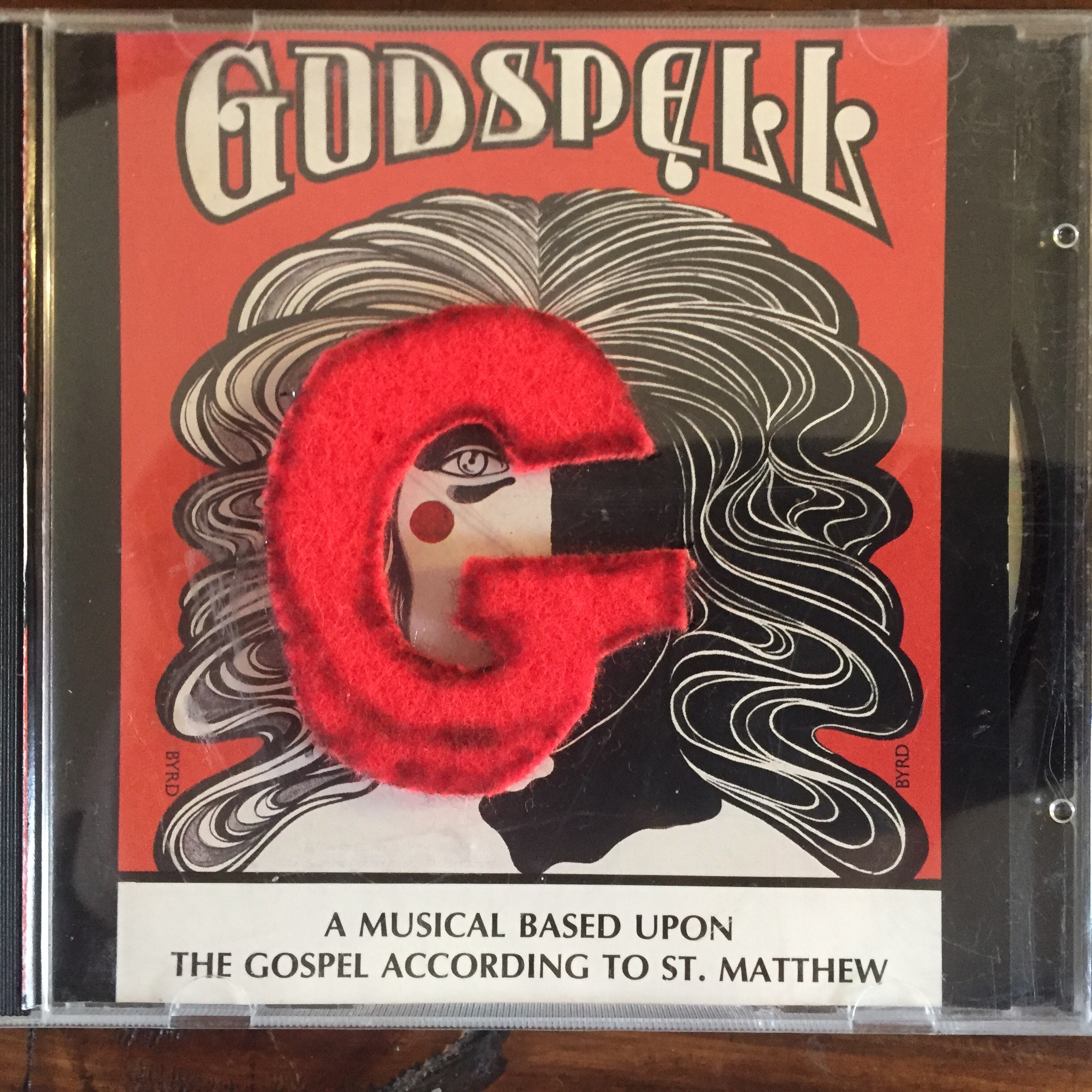
Braille probably takes a while to learn, and my older friend isn’t about to try. So when he asked for some CDs of cheery Broadway musicals (yep, some of us still play CDs), I glued “indicator letters” on the jewel cases so he can tell them apart, e.g., “G” for Godspell or “MF” for My Fair Lady. I can’t think of an alternate deployment of felt letters, but you might.

Two glues worked:  Mod Podge and super glue. A glue gun might have melted the felt or plastic. Three letters of readable size took up too much space. Cardboard wasn’t thick enough to read. The thicker the felt, the more readable. If the colors are ugly or your stenciling sloppy, well:  they’re blind. Don’t forget a nice cup of coffee as you craft.

I’d rather take a Test than celebrate Valentine’s Day

On the eve of everyone’s favorite manufactured holiday, here’s a test for you on absentmindedness from a book on habits. It’s called, cheerily, the Cognitive Failures Questionaire. It may depress you more than Valentine’s Day—or not. Or maybe you entirely forgot it’s Valentine’s Day because you’re absentminded.

Take the test and find out just how bad off you are. Fun!


Too Old to Uber, Too Young to Die

xmas-flatsI don’t know where to begin in trying to make sense out of 2016 for Dear Reader. In my current state of beleaguered puzzlement I am unqualified. It says something about this past year that so many watched Gilmore Girls (fanciful escapism), and guests who said they were coming to our holiday party simply didn’t show (boggled torpor…or home watching GG).
Observing actual, known stars in the Hallmark Channel’s Christmas movies this year, these oeuvres normally populated by actors you’ve never heard of, I had to wonder: desperate for work or, like most of us, just trying to contribute something positive in a world gone mad while wearing a corrective overblouse* to conceal unsightly swags of waistmeat?

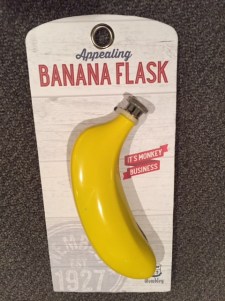
flaskWhat a year. The departures of Prince, Bowie, Shandling, Frey, Ali, Wilder, Cohen, Palmer, Zsa Zsa, Michaels, Princess Leia and her funny mom, and Wessonality ~ and that’s just the celebrities. Olympic swimming shenanigans and women’s gymnastics gold. Refugees tossed about the globe. The Cubs. A female announcer at the Macy’s Thanksgiving Day Parade gushing at a Victoria’s Secret model on live television about what an “honor” it must be to wear the Fantasy Bra. Women my age everywhere trotting around in stilettos – an orthopedic surgeon’s dream. Throw in, oh, the election and its aftermath, with the promise of a completely bizarre year ahead, and you have undiluted global befuddlement.
Now I’m not a strict party voter. I vote for the seemingly best candidate. Some of my truest friends are republicans, libertarians, anarchists, apoliticos, and members of the blissful ignorati. I’m not that smart myself. I had no answer when a young person asked at Thanksgiving, “Are there any vegetarian republicans?” I don’t know. Are there?

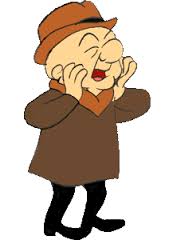
magooI don’t trouble myself with politics much because it’s evidently out of my control; at my advanced age I don’t fret about the uncontrollable unless it involves immediate family or friends. I’m old. Not old-old. Not Crazy Old Duffer with a limited range of movement old, not bumbling around Mr. Magoo old. Just tired old. Not-that-hopeful old. Old enough to speculate about some great feat I might accomplish, or imagine some sooper piece of good fortune that might come my way, ponder this notion briefly, and go, “Nah.” I’m pretty much just trying to avoid pain at this point.

Old. I embarrass myself with antiquated references. At work  I mention interoffice mail, pneumatic tubes, or Telex… at parties I’ll bring up Schweddy Balls, Lemon-freshened Borax  or the Hooterville Cannnonball,  exclaiming hilariously, “Book ’em, Danno,” or “Where’s the beef?” while lurching around the buffet like an old jalopy, the young people rolling their eyes Where’d you dig up this old dino? — as their parents laugh heartily, if not without a certain flushed derangement, at my archaic allusions.

uberA friend is using paper flash cards to get through school; she has to make them because flash cards are digital now. You can’t find a taxi, what with the Uber takeover, which I wouldn’t mind except I can’t figure out the Uber app half the time. Is a car coming? Did I order one? I can’t tell. I can’t even see my phone.

One excuse for our escalating idiocy is that we work long hours and are routinely exposed to an excess of information. There’s little free time. We end up doing everything too fast. Emails I send are definitely not carefully read by their recipients; if I ask 3 questions, I’m lucky to get 2 answered. I think I read things carefully, but I guess  not. I saw in an office notice that some employees will be “executed” where it really said “excluded” (seemed harsh). I interpreted a bulletin board’s “selectboard meeting” as “skateboard meeting” (more fun!). I misread a newspaper headline, Signs of Natural Resources on Mars, as Signs of Human Resources on Mars. (Did they find, like, on the planetary surface, an HR pamphlet, Respecting Other Martians in the Workplace & Grooming Guidelines?) I think I remember everything. Yet a friend insists that “chocolate bedroom antics” is something we discussed recently with big laffs. Zero recollection. Old.

xmas-crowd-largerBut I’m not too old to give! For you, Dear Reader, two gifts. The best way to open a pomegranate, and Yoko Ono’s response to DJT’s winning the presidency. Enjoy.

Suggestion for 2017: tune out and slow down. Do less. Device less. Pay attention in conversation. Go to the movies. Read a magazine. Sort a drawer. Take a nap. Love. Do one thing at a time. You might actually remember it. Good day, good luck and – let’s hope – good year.

*Nod to Zora

Twitter handle: @uvgvt.