https://www.instagram.com/reel/C20pswbPvY-/
But you can always sign up for my email list at http://www.annaikens.com and WIN A PRIZE. Mention Speedy Spoo for extra credit/favoritism.

https://www.instagram.com/reel/C20pswbPvY-/
But you can always sign up for my email list at http://www.annaikens.com and WIN A PRIZE. Mention Speedy Spoo for extra credit/favoritism.

Again, free downloads all week at the Amazon. Use the free $0.00 eBook at upper right, not the Kindle download. Sign up for my e-list at www.annaikens.com and win a Prize! And my undying LERV.


Yepper! Free eBooks now on the Amazon – click the $0.00 eBook on the right, not the Kindle one. A REVIEW would be welcome! Join my email list at annaikens.com and win a PRIZE. Someone will, why not you? Or come to my reading on March 21 in Norwich?


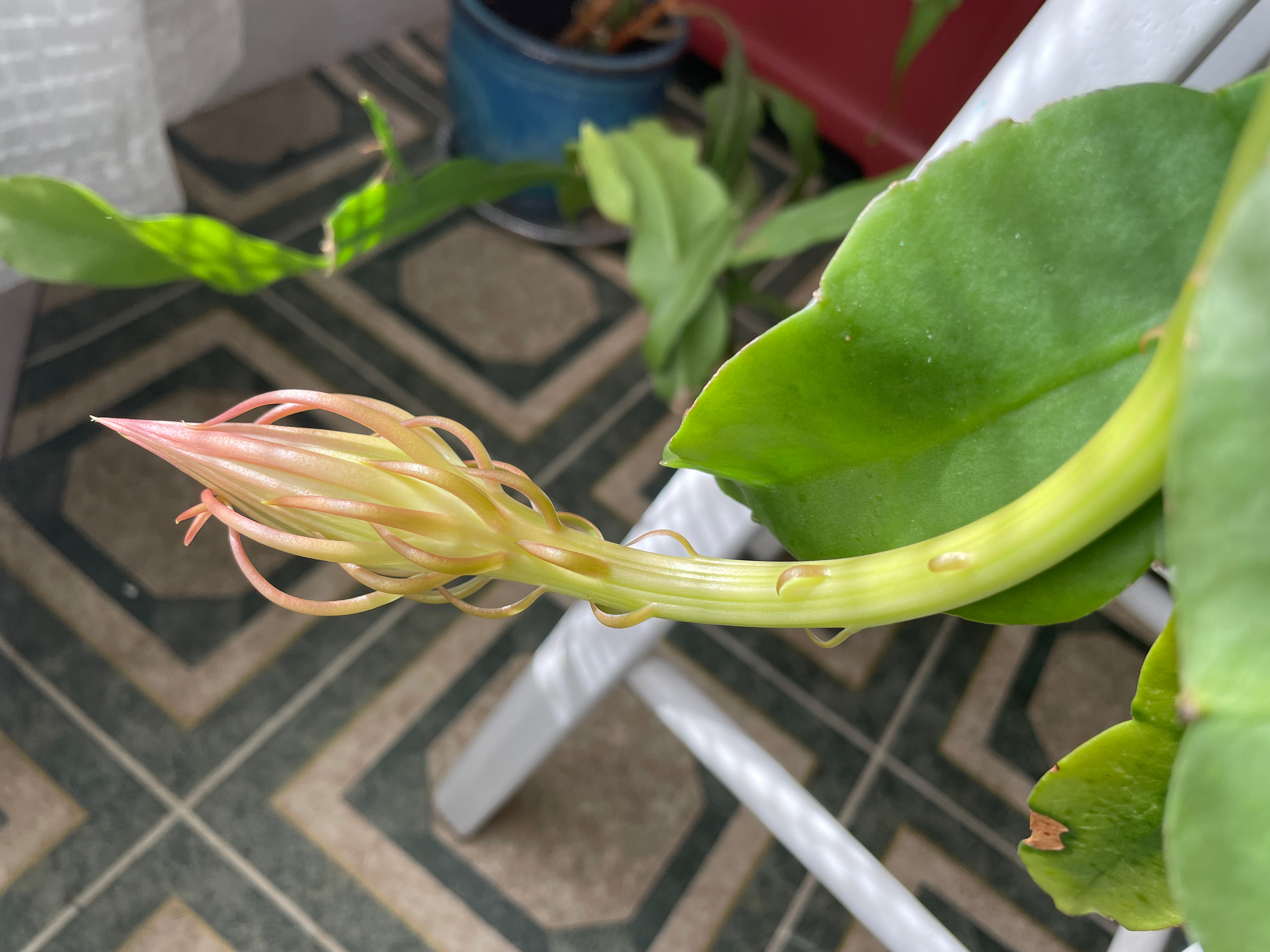
Night Blooming Cereus blows…3 days from now? Hard to predict.
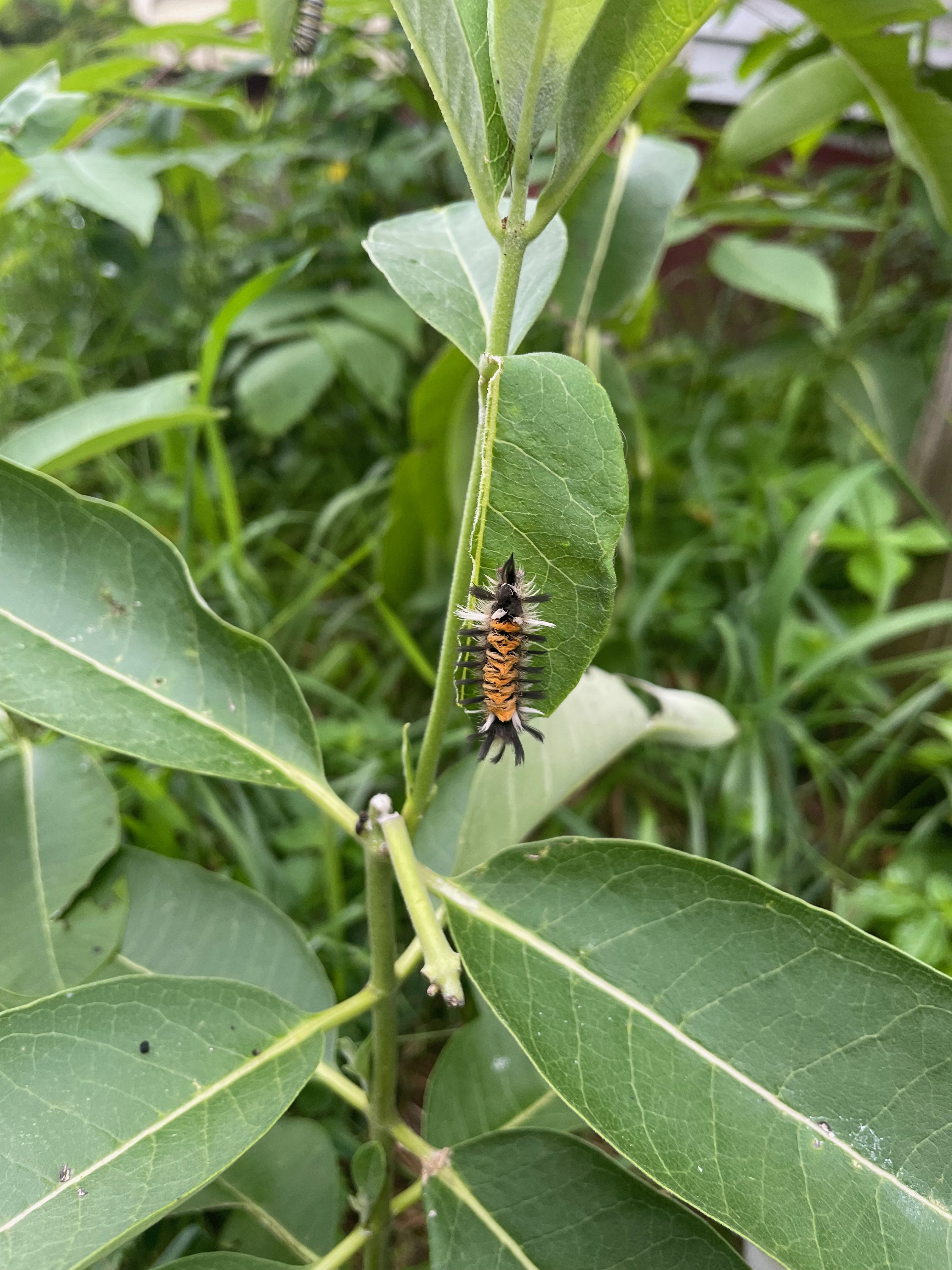
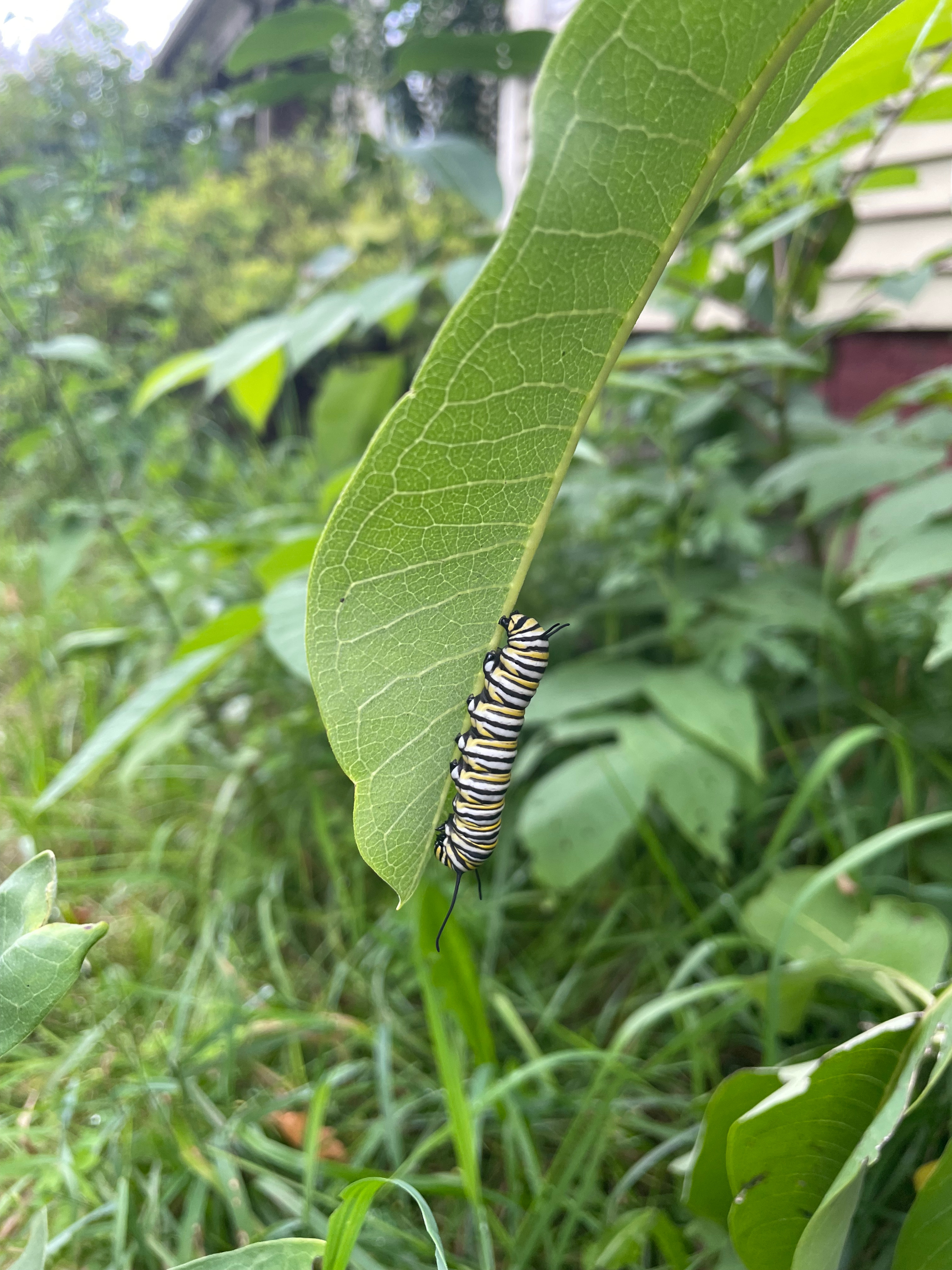
Meanwhile, the Monarch caterpillar eggs in the ground at the base of the milkweed plants somehow survived Vermont’s flooding. The fuzzy guy is young; the juicy fatty is ready to TRANSFORM. Decided not to bring inside this year. I always miss its cocoon spinning no matter how closely I watch the thing. But it does keep them from getting eaten by birds, so I may change my mind.
But in general: aren’t things happening at once? It’s a bit much, no?

When I’m not eating like a hog, moving like a sloth, sweating like a horse, and smelling like a goat, I’m swimming like an otter, laughing like a hyena, sleeping like a log, and smelling like a rose. Or some mixed-up combination thereof. It’s all extremes lately.
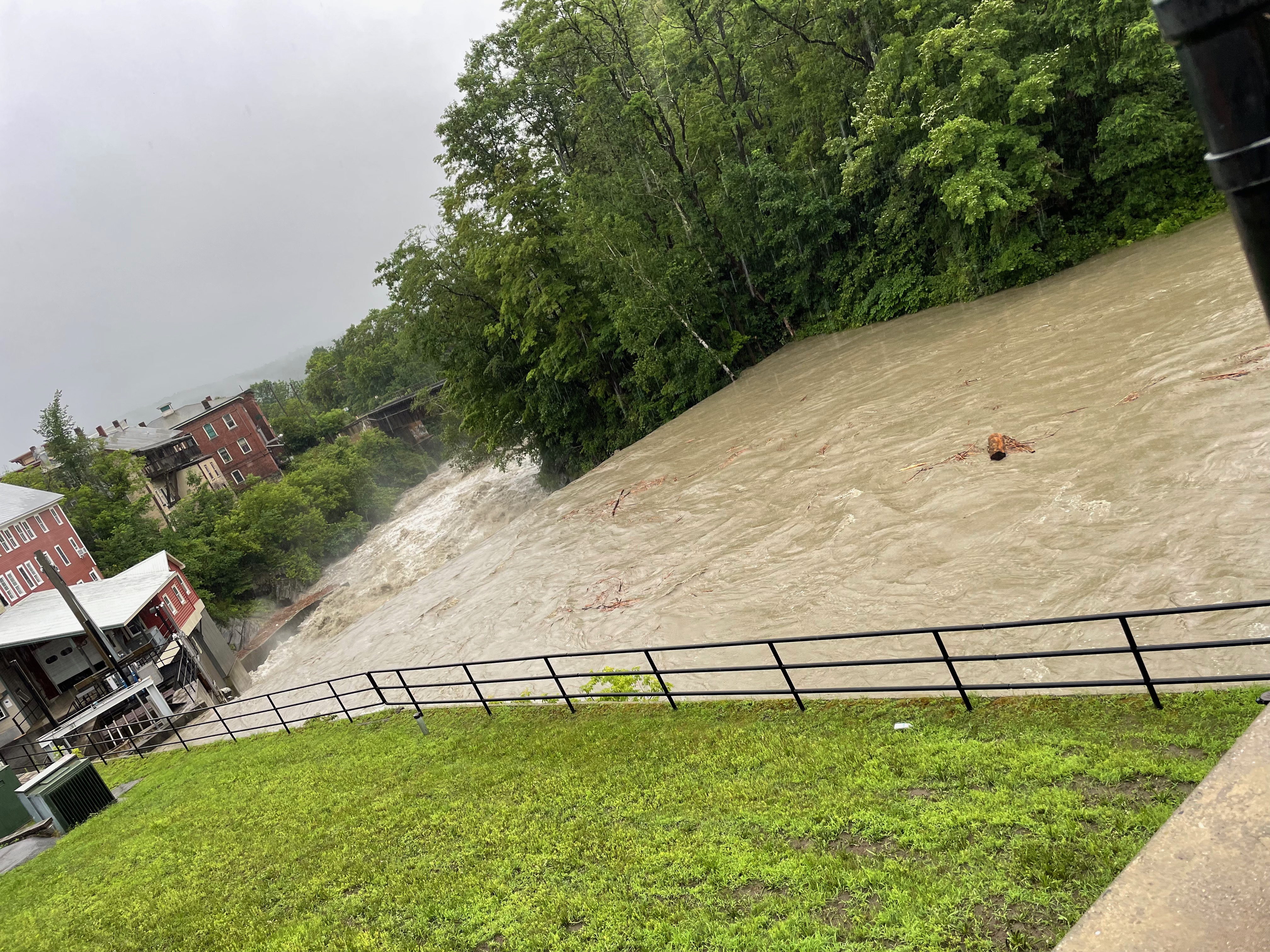
In a week’s time we have such highs and lows, no? One day it’s a crazy-good 4th of July; days later, disaster strikes. If, in Vermont, you haven’t suffered serious flood damage, you know people who have. Flooding and dam issues continue. It has us on pins and needles, drinking like fish. Our daily lives seem full of extremes.
Maybe this is partly due to COVID. We’re now positively overjoyed, in a way we weren’t prior, at simply sharing a sunset or religious service or dancing together. A party is a big deal. Dining out? Thrilling! Contrarily, with people being more forthcoming these days, we hear sad personal news like never before (diseases, suicides, overdoses). Throw in endless televised news with upsetting global stories and there is much to fret about. The highs are higher and lows more frequent, like a screwy rollercoaster.
The weather is reflecting the extremes inside us, or causing them. Both? Initially, I dug the mad dash to close car windows for daily cloudbursts. Now it seems silly that I’d planned to stand out in the biblical downpours and get soaked. Fun as a kid. Now: rain is scary.
Before the flood, I wrote: “How do wild animals feel about such rain? Do they just run with it? Or are the birds like, come on already, quit raining, we gotta f l y. The fish hate droughts, but do they enjoy chronic turbulence? I envision little fish banging into rocks, mystified. Is that what divorce is like? Nothing makes any sense any more, and you’re just tossed around, blind, lost?”
Now it seems unlikely any fish survived Vermont’s waste-filled rivers. Riverside songbirds have taken off, their cover washed away.
There’s not a hell of a lot we can do for these floods except build wiser, use less fossil energy, monitor rainfall better, and help each other dig out. With terrible timing I had a bike crash right before the flood, so I can’t get that hopeful feeling you get from helping others; I can’t lift my own head. Fit as a fiddle after the Irene Flood, it was easy to roll up sleeves and dig in. The Bucket Brigade marched by in their Wellies, waders, and shorts, bailing out basements gratis. We cheered! Our young, Superhuman Heroes! Nothing beats in-person neighbors helping neighbors. Sign up at vermont.gov/volunteer.
Friend Sassy and I were discussing how, decades ago, we just felt more safe. Then I see a sign, “WARNING: Windows can be hazardous.” For God’s sake, what isn’t? We constantly learn of new hazards, with dread. Like: Do not go in brown, churning water. There is no oxygen in such water, and humans have no buoyancy as a result. A life preserver does no good; you will sink like granite. As I’m afraid did the fish.
Weather disasters, ticks, shootings, marauding bots … who feels safe? The good news is that humans default, mostly, to trust. (See Malcolm Gladwell’s dark book Talking to Strangers.) Turns out we mostly try to envision a safe world. We trust.
Electrical storms, now there we can take action. Lightning can mess you UP. Fuse your vertebrae, destroy your bone health or hearing … avoid! If you can hear thunder, you can be struck by lightning. Lightning can strike from 10 miles away. Do not go in a shower or tub during a storm. Or on a landline. Or by a window (hazardous!). Hide in bed. I do.
A friend said about The Flood, “Not sure what the damn message is.” I have no answer. Some questions remain ever unanswered (“What’s that smell?”), others answered eventually (“It was the O-rings”). Undeserved misfortune is simply part of life, no? In Vermont we try for tiny carbon footprints. California blows us away in electric vehicles, but Vermont buys local, promotes rideshares, and wastes little. And gets punished anyway.
For now, we’re like blindfolded rats in a maze, operating on some combo of memory, ESP, and science – to repair and rebuild. Then, as humans do, buoyed by the LIFT of helping each other and an inclination towards trust, we will bounce back. Soon we’ll run like the wind, baying like hounds, having the time of our lives. Strong as an ox, maybe a blue ox. Maybe sooner than we think.
May you rise like a Phoenix, with strength like Hercules’, helpers lifting you like angels, and your worries vanishing like a mist. Please enjoy, as able, a Good Day.

…when your name is on it, you’re very confident indeed.
Tonight at Kimball Public Library in Randolph! Please, God, make somebody attend.


When I left Vermont for Massachusetts six years ago, it seemed that I’d relocated to a wicked windy state. The winds would positively howl at night in my Boston-adjacent neighborhood, a kinetic metal sculpture outside gonging like a buoy.
But when I moved back to Vermont two years ago, I realized the entire northeast had in fact gotten windier. As has much of our country in the last 10 years. New England has something called a “jet streak” nearby, a part of the jet stream where winds are stronger, but the west has been getting clobbered, too. The whole planet has become mysteriously windier.
While of great benefit to wind farms, our newly windy climate has less favorable consequences in our area. In winter, power outages are terribly unfun when trees or limbs fall on power lines. In summer, people are fond of burning stuff outside, often unmonitored. With all of our old wooden structures in Vermont, and a recent trend to long weeks without rain, that’s just not a good idea.
Then there’s sports. I was planning on working on my tennis serve this summer, but it’s hard to get any consistency going when 1.) your baseball cap is giving you lift like the Flying Nun, and 2.) you have to guess as you toss your ball high into the air for the serve: (a.) Will there be wind? (b.) How strong will it be? (c.) From which direction will it come? That goes for your lobs in tennis and, frankly, any ball of any kind coming at you or leaving you in any sport. The winds are not only gusting, they’re swirling. Is this affecting pitching? Batting? Basketball? It’s got to be affecting golf. Surely volleyball. Fake sports like pickleball and badminton must now be more like gambling than sports.
Wait what? Did I just denigrate pickle ball? Yes, I did. Badminton never pretended to be a real sport; it knew its place as a charming folly in the wide world of athleticism: a dusty boxed set that lives in the attic for years at a time, trotted out gamely at family reunions, if and when the shuttlecock can be found and its rubber nub hasn’t crackled apart, rendering it useless.
Really, bully for all who dig pickleball, but I gave it several tries and here’s my assessment: a noisy “sport” named after a dog, invented by restless wealthy people, with inscrutable scoring that takes so long to learn that players mostly announce the score in the interrogative, that feels like a fanciful game your little nephew makes up and keeps changing the rules on so that you can’t beat him. Mainly, it screws up my tennis courts, man, with distracting court tapings and heinous net-lowerings that pickleballers don’t bother to fix when they’re done. Tennis is a sensible and courteous game, for civilized people. Play tennis. Before a swirling windy vortex sucks your pickleball, more whiffle than ball, up into the heavens forever (“Hate mail can be addressed to author@annaikens.com”).
But I digress. Back to the wind. The “winds of change” is an expression signifying a sense that change is in the air. Has Dear Reader ever gotten this? At times I have felt that the wind did in fact portend change, or I at least interpreted it thusly and used it as a catalyst to make my own change. Some of us take unusual winds as a very real sign. And given current world events – and news channels relentlessly covering not only existing problems, but also imagined terrors that may never even come to pass – we can easily panic about what changes may be headed our way.
I’ve said it before, but it never gets old: catastrophizing about an unknown future and all forms of hand-wringing in general serve only to rattle us. It does not serve us to fret over things out of our control. It’s up to us to rein in our worrying — including all who live alone and are unfortunately free to ruminate endlessly, sleeplessly, with no one to talk to or offer comfort. It’s up to each of us to do our best to remain grounded, not like a pickleball sailing off to Mars. It’s up to us to think pleasant thoughts for our selves, each other, and the planet. Otherwise, we won’t feel well, or safe, or loved. What good could come from that?
Truly, it’s entirely possible that what is coming is something very good indeed. Some bad things in the mix, no doubt, but maybe something major and lovely is en route. Consider interpreting the winds this way: that people who think or act upon others with harmful intent in this time and place might soon find themselves powerless, blown far, far away like so many cracked and useless shuttlecocks in strong winds. Then those of us who think and act with love will finally understand the power of love – our love, and that of the entire world.
Okay, I’m not kidding, the wind is howling as we speak. All cosmic musings aside, this should be an interesting summer between tent pitching and anchoring umbrellas at beaches. Beware projectiles. Think positively. Good day.
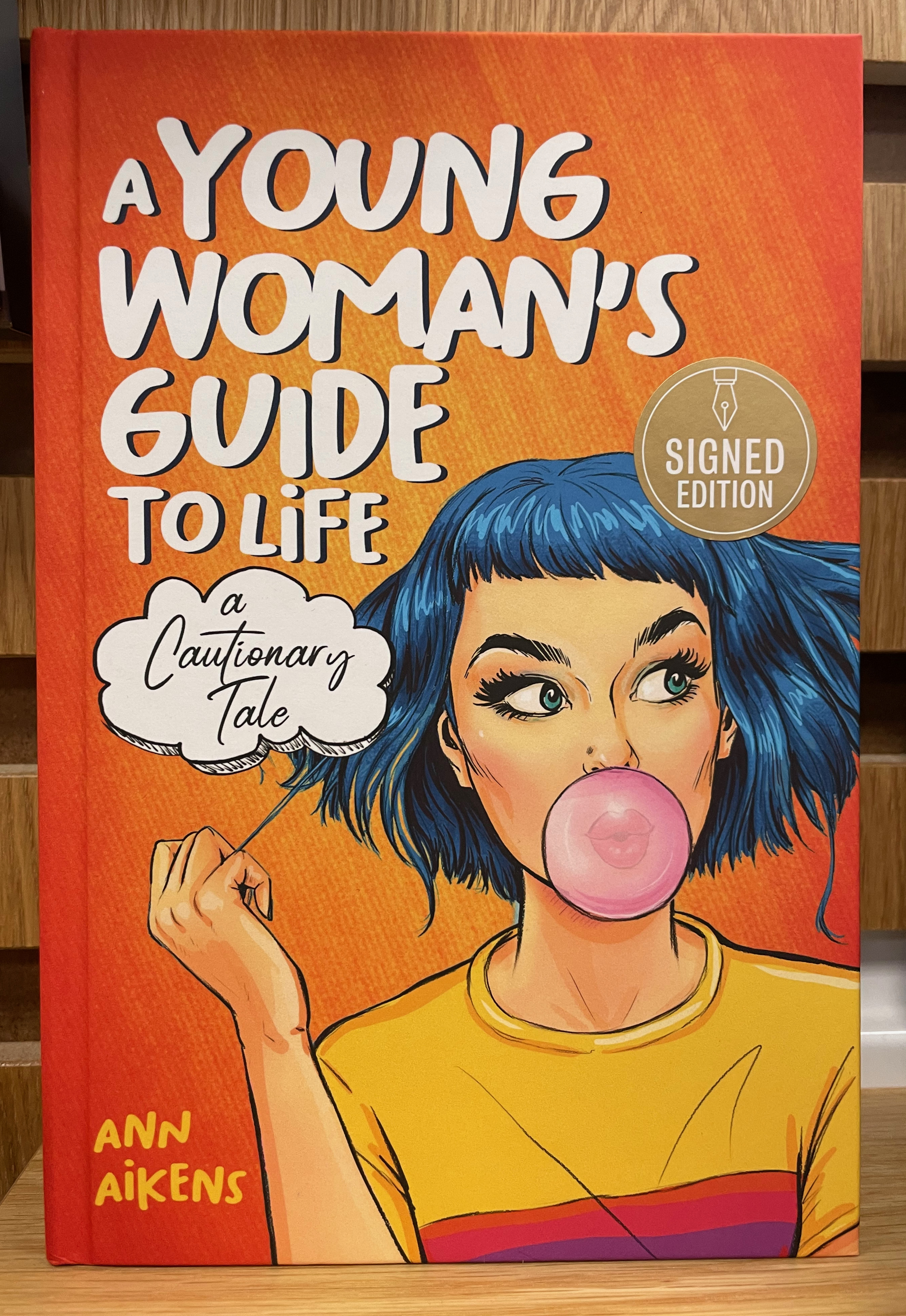
Ann Aikens has published a darkly comical book of advice, A Young Woman’s Guide to Life: A Cautionary Tale, available in Vermont shops listed at annaikens.com, and on Amazon. She has written her Upper Valley Girl column since 1996.

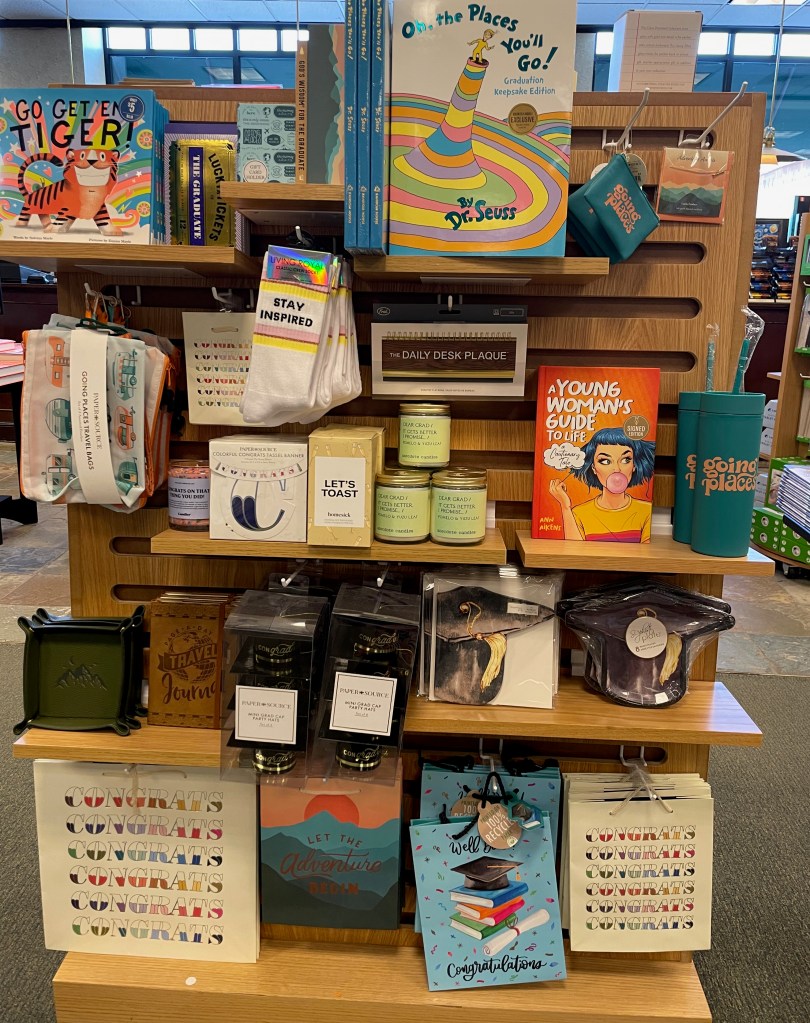
BUY LOCAL is big in Vermont. Booksellers are All In to promote local authors, way more than other places. Huge thanks to:
• Royal Towne Gifts (Randolph)
• Yankee Bookshop (Woodstock)
• Bear Pond Books (Montpelier)
• Barnes & Noble (Burlington)
Today’s high point: goddess Teresa at B&N putting my very orange book on both the Graduation and Local shelves. 🥰 Highest point: seeing “Signed Edition” stickers being applied by Goddess to humble tome.
Then my nephew’s last-place baseball team beat the first-place team. Can it be?!
But enough about us. Do comment with your own Good News. So needed! ❤️

Delivering a eulogy for someone you’ve known for decades isn’t easy. There’s a bottomless treasure trove of memories, so it’s hard to select the right ones. The ones that will matter to most of the funeral attendees — or that might matter the most to one person? Or maybe that matter most to you, as a speaker? Without the eulogy going on for like two hours. I bet someone, somewhere has set a record for the longest eulogy. Maybe in other countries or galaxies they are very long indeed.
Recently we held a service for sacred Aunt Natalie. Natalie was not technically our aunt, she was our cousin once removed, the cousin of our father. She grew up in Vermont, became a teacher, married a state trooper, and had my two cousins—I mean second cousins. They were the reason my family visited Vermont, and came to love Vermont for more than just her natural beauty.
O, her seasons, all distinct! The fifth season called Mud Season. Stick Season, when the leaves have fallen off the trees, revealing magnificent textural backdrops – and awful housepaint jobs. Grit Season (when winter’s road-sand blows around after the snow’s gone) and Manure Season (when the entire state is fertilized, to our vegetably anticipation and olfactory dismay). Surely there are sub-seasons involving flora or fauna that Dear Reader relishes. Not Black Fly Season.
Sometimes I’ll be in the middle of one season and flash forward into another season entirely. Do you do this? It’s mind-blowing because Vermont is like a different planet in each. I time-travel to the alternate season and think, “Wow, winter: white!” Or: “Summer…wow.”
As with the seasons, I flash back to years gone by. Younger versions of us, the now-gone people still alive — all laughing — us kids up to some mischief. Feels like yesterday. It blindsides me when I’m driving. I cry. As friend Lee says, “It always seems to happen in the car.”
Back to the cousins. We visited Vermont because our Scottish great-great-great grandparents, blacksmiths, had settled there. The introduction of the automobile caused my dad’s father to pursue other work, in Ohio, where he met his bride. Their summer trips back to Vermont got my dad hooked on ‘mont. Once a parent himself, he got us kids hooked. Back then, kids didn’t get to choose family vacations (as if!). Thank God our parents chose Vermont.
You visit a place not just for her physical characteristics, but for her people. Think of places you’ve been (Maine, the south, islands, Italy) and the locals there with qualities different from people at home, lending that place its particular flava.
When even one person leaves the planet, the flava of Earth changes, no? Most of you have lost someone close to you. In my (second) cousins’ vernacular, it’s wicked hard.
My Aunt Natalie was born with a spark. Neighbors, hairdressers, toll booth operators … she left an impression on each. You know how some relatives were old your entire life? Natalie always looked to be 50 years old, even at 80. She always wore shorts. But mostly I recall her sparkle and humor and a kind of innocence that seemed like it was from another era. Because it was.
Swimming with Natalie by moonlight in Silver Lake! As my sister said, she had a way of making the everyday magical. She was a true lover of children. Whether you were you pounding out Grand Old Flag on the piano or had sketched an inscrutable picture of nothingness, she’d exclaim, “BeaUtiful!” She made children feel valuable, which I think many children did not feel in decades past.
Ah, cousins: the gift of noisy fun. Those classic Thanksgivings, Memorial and Labor Days, and of course The Fourth. Something called “bull beans.” Treks via inner tubes to the Barnard General Store for penny candy. Making a game of anything at all. The parents sending us to Richardson’s with returnable bottles to get them “supplies.” We got candy.
Countless holidays over countless years, always with music, always with laughter. Ever effusive, Natalie would tell my mother, “You make the BEST salads!” My dad would howl, because what’s really involved in a salad? When it was time for my family to leave Vermont, I would cry and my brother would hide, so that leaving became – briefly – impossible.
Natalie passed bit by bit from our lives. But these memories remain forever indelible, of an energetic and vivacious woman so greatly loved. As Dear Reader knows, we never forget those we adored. Our pain at our loss is a beautiful pain. An honoring. As sad as it makes us.
Thank you, Aunt Natalie, for years and years of fun and art and music and jubilance and adventures and hilarity … and most of all, most of all, for your smile and voice and laugh.
If Dear Reader knows what I’m talking about, maybe today at some point: look up! Say Hello to your people gone by. Tell them you remember, you remember all of it. That you just know you’ll see them again. Good remembering, and good day.


I don’t know about you, but I’ve had a heck of a time concentrating, prioritizing, and just generally getting stuff done this month. It’s not that I’m not doing things, I’m just not getting all of them done. I can’t wrap my arms around it.
I’m not blaming it on cabin fever, endless shoveling, Covid fog, menopause, or dementia. I’m blaming it on a world so fraught with troubles that I can’t sleep, which really screws up your mood and cognitive abilities. And blaming it a bit, of course, on the March Hare.
To refresh, as some of you know I’ve written about this leporid before: the expression “mad as a March hare” – “mad” as in British for loony – comes from the bizarre boxing matches, leaps, and chases during the hare’s mating season in March. Other hare facts: they live mostly in the west, cannot interbreed with rabbits with their different number of chromosomes, and are mostly nocturnal – except for in March.
Hares have never actually been domesticated, so the title of this column refers, in part, to doing the impossible. The impossible, in my case, means trying to keep on top of everything, at work and at home, in March. Sometimes it feels for a brief moment as if things are going smoothly, doesn’t it? I call this “the illusion of control” and it is very satisfying indeed when it occurs. “Is everything under control?” I ask people. “For now!” some answer. Take it and run (or box, or leap) with it while it lasts.
This column’s title also refers to navigating the madness — March itself is crazy. Many months can be, but March is reliably so. In like a lion? And sometimes out like one. Perilous mud hazards that freeze overnight into death grooves? Definitely. Feeling serene, as if all is right with the world? Definitely not. Occasional warm-ish days, the school kids in shorts in strong winds? Yepper. The flip-flopping weather makes us nutty. I’m naming this Transitional Confusion. We’re boggled. Well, the first move in taming a problematic situation is just acknowledging that there is one. Then knowing how to let what’s entirely out of your control run free (or box or leap).
March is also the peak of skunk mating season, which is not an astonishing visual event like the hare’s, but an olfactory one. Little fellers are OUT. The woodpeckers are at it, too. That’s a real auditory nuisance when they choose standing seam as their instrument of choice.
Sick of winter, with its brutal holiday winds, soggy muck, and epic snowstorms? I said to my Vermont-born neighbor, “It’s snowing again Tuesday! A heavy, wet snow!” as the plow leaves a wall of cement-grade sludge at the end of our driveway with each pass. My neighbor’s laconic, Vermonty response: “We’ll get there.”
True. That’s calming. But first: mud season! It’s like mourning. There’s no way around it; you just have to go through it. Major seasonal transitions, these, from snow to mud to gorgeous SPRING. Expect confusion.
How to Manage Transitional Confusion and Generalized Weirdness
•If you don’t feel like doing something that badly needs doing, just do something else that also needs doing, but maybe a hare less. Then you’ll feel like a winner, not a loser, even if not the right kind of winner.
•I asked my dentist why my dental floss smelled so bad (no idea why I huffed it…chalk it up to March). She said, “Because you’re scraping off plaque that is fermenting.” It ferments from bacteria. And if that doesn’t get you to floss, I don’t know what will. Cram flossing into your to-do list?
•Go to the movies. So sane-making. The smell of the popcorn, the trailers promising future fun, the snickering with your seatmate, the movie itself on a big screen in a dark theater. Best of all, perhaps, the Shared Experience in a roomful of strangers—some of whom laugh at things you didn’t catch as funny, some eating noisily, some openly bawling at the ending (guilty as charged … of all three). As we isolate in our homes, streaming and watching TV, the Shared Experience with strangers is lost entirely. But when you leave the theater, you feel refreshed somehow by this magical communal outing. For Dear Reader that probably means Randolph, which boasts the oldest cinema in Vermont, or maybe Montpelier, Waitsfield, Barre, or Hanover. Rutland’s remains closed, alas. Grab a friend and go! You won’t regret it.
•Make or see art? Get materials and tools from Brainstorm Art Supplies in Randolph and make something, or just soak up the cool vibe in there. Listen to music. Visit galleries. Cook, before it gets too hot to.
•Go outside, close your eyes, and just listen. You’ll hear crows, jays, geese, insects, weird trillings and whirrings, gruntings, and soon: peepers! Savor the freshness of the chill air.
•Retire sooner at night and read a book – or a feature story in this paper. So you can awaken earlier in top form, fit to endure morning skunk bouquets and Woody Woodpecker’s relentless rattlings.
The word “hare” cries out for a listing of punny salon names, but luckily for Dear Reader I’m out of space. Feel free to submit your favs.
We’ll get there. Good day, and good transition.

Official Site of Author Ann Aikens
A Miscellany of Travel Tidbits, Tips and Tales
Just another WordPress.com site
The vibrancy of life is still alive in New England
In which our heroine decides to pursue a new and exciting career... and write about it.
Another Good Day in Rural America © 2012 - 2024 Ann Aikens ~ all rights reserved
Another Good Day in Rural America © 2012 - 2024 Ann Aikens ~ all rights reserved
Poetry, Visual Arts, Music and IT Tech
News and comments on the NH Pulp Fiction anthology series
Another Good Day in Rural America © 2012 - 2024 Ann Aikens ~ all rights reserved
Because once you get off this road, there's just no getting back on
In Queensland, Australia
Another Good Day in Rural America © 2012 - 2024 Ann Aikens ~ all rights reserved
The latest news on WordPress.com and the WordPress community.
Another Good Day in Rural America © 2012 - 2024 Ann Aikens ~ all rights reserved
 uppervalleygirl